
What macros actually are
“Macros” are the three macronutrients your calories come from:
Want your own numbers? The macro calculator turns your height, weight, activity and goal into a daily protein, carb and fat target in a few seconds.
- Protein, 4 kcal per gram. Builds and protects muscle, and is by far the most filling.
- Carbohydrates, 4 kcal per gram. Your body's preferred quick fuel.
- Fat, 9 kcal per gram. Hormones, satiety, and the reason food tastes good.
Same calories, different macros, very different experience. A 1,800-kcal day built on protein and volume feels like plenty; the same 1,800 kcal from pastries and lattes feels like starvation with extra steps.
The one macro beginners should watch: protein
If you take a single thing from this guide: most people trying to lose weight under-eat protein, and it costs them twice: more hunger during the diet, more muscle lost by the end of it. A practical target while losing weight is roughly 1.6-2.2 g per kilogram of body weight (about 0.7-1 g per pound). For a 75 kg person that's 120-160 g a day, which takes deliberate effort: eggs or yogurt at breakfast, a real protein source at every meal.
Carbs and fat: mostly preference
Once protein is set and calories are right, the carb/fat split barely changes fat-loss results, pick the balance that makes you happiest and most consistent. Love bread and rice? Lean carb-heavy. Feel better on eggs, olive oil and fewer starches? Lean fat-heavy. The best split is the one you stop noticing. A sane default to start:
Starter split: protein 30% · carbs 40% · fat 30% of calories. Adjust to taste after two weeks, the protein line is the only one worth defending.
How to track macros without weighing everything
The old way was a food scale and a database: weigh the rice, search the chicken, log the oil you forgot. It works, and almost nobody sustains it. The 2026 way is photo-first: snap the plate, let an AI food scanner estimate calories and the macro breakdown, and correct anything that looks off with a tap. You trade a little precision for a logging habit that actually survives, and the habit is what moves the scale.
Macro tracking in Calfit
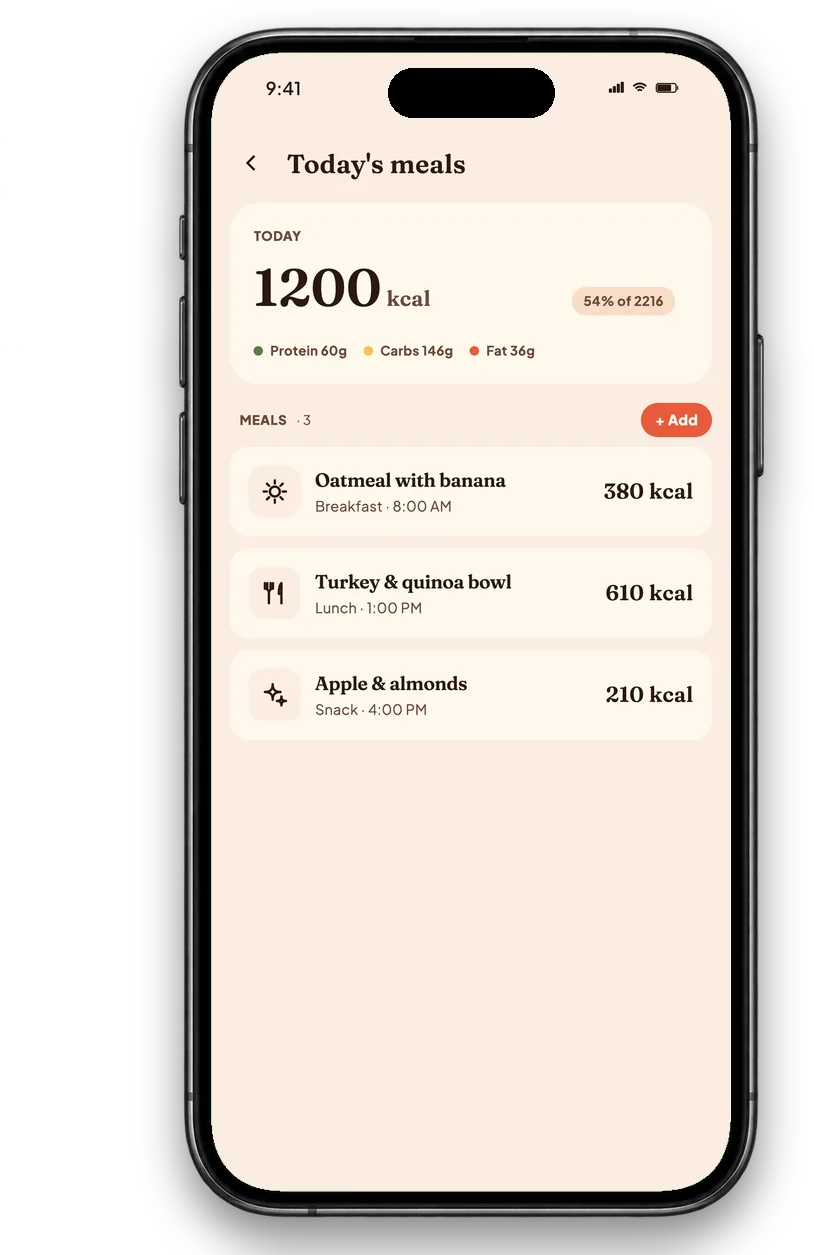
Calfit sets protein, carb and fat targets from your goal during onboarding, then fills your three macro rings automatically every time you snap a meal. You always know where the day stands, “62 g of 114 g protein by lunch” tells you dinner should be the chicken, not the pasta. And when you ask Pip's coach “what should I eat?”, the suggestions respect both your calories left and the protein you still owe yourself. The full feature list is in what a calorie counter app should do, and if you're eating low carb the keto calculator sets the same protein target with carbs and fat split differently.
Protein is the macro most beginners fall short on; start with the high protein, low calorie foods list.
Sources
- Food energy: methods of analysis and conversion factors, Food and Agriculture Organization, 2003
- International Society of Sports Nutrition position stand: protein and exercise, Journal of the International Society of Sports Nutrition, 2017
- A systematic review, meta analysis and meta regression of the effect of protein supplementation on resistance training induced gains in muscle mass and strength, British Journal of Sports Medicine, 2018
- Effect of low fat vs low carbohydrate diet on 12 month weight loss in overweight adults (DIETFITS), JAMA, 2018
- The role of protein in weight loss and maintenance, American Journal of Clinical Nutrition, 2015
How this was made
Written by Abdullah Javaid, founder of Calfit, drafted with AI assistance and edited by hand. Energy per gram uses the standard 4, 4 and 9 kcal for protein, carbohydrate and fat, and the protein range of 1.6 to 2.2 g per kilogram comes from the position stand and meta analysis listed above. The screens are captures from the current Calfit app.