Why protein-per-calorie is the number that matters
All food fills you up a little. Protein fills you up the most per calorie, burns the most calories in digestion (20-30% of protein calories are spent processing it), and protects your muscle while you lose fat. When you're in a calorie deficit, every 100 kcal has a job to do, the question is how much protein each 100 kcal buys.
How much do you actually need? The protein calculator sets a daily target in grams from your body weight and how hard you train.
The leaderboard (protein per ~100 kcal)
Figures are cooked weights from USDA FoodData Central, because cooked is how you eat it and the difference is not small: raw shrimp is 19 g of protein per 100 kcal, cooked is 24. Sources are listed at the end.
Elite tier: 18-25 g per 100 kcal
- Egg whites, 11 g protein per 50 kcal. The purest protein in the supermarket.
- White fish (cod, haddock), ~22 g per 100 kcal, and a big fillet is barely 120 kcal.
- Shrimp/prawns, ~24 g per 100 kcal cooked. Cocktail-party food that out-proteins a protein bar.
- Canned tuna in water, ~25 g per ~110 kcal, costs pennies, needs zero cooking.
Everyday tier: 12-18 g per 100 kcal
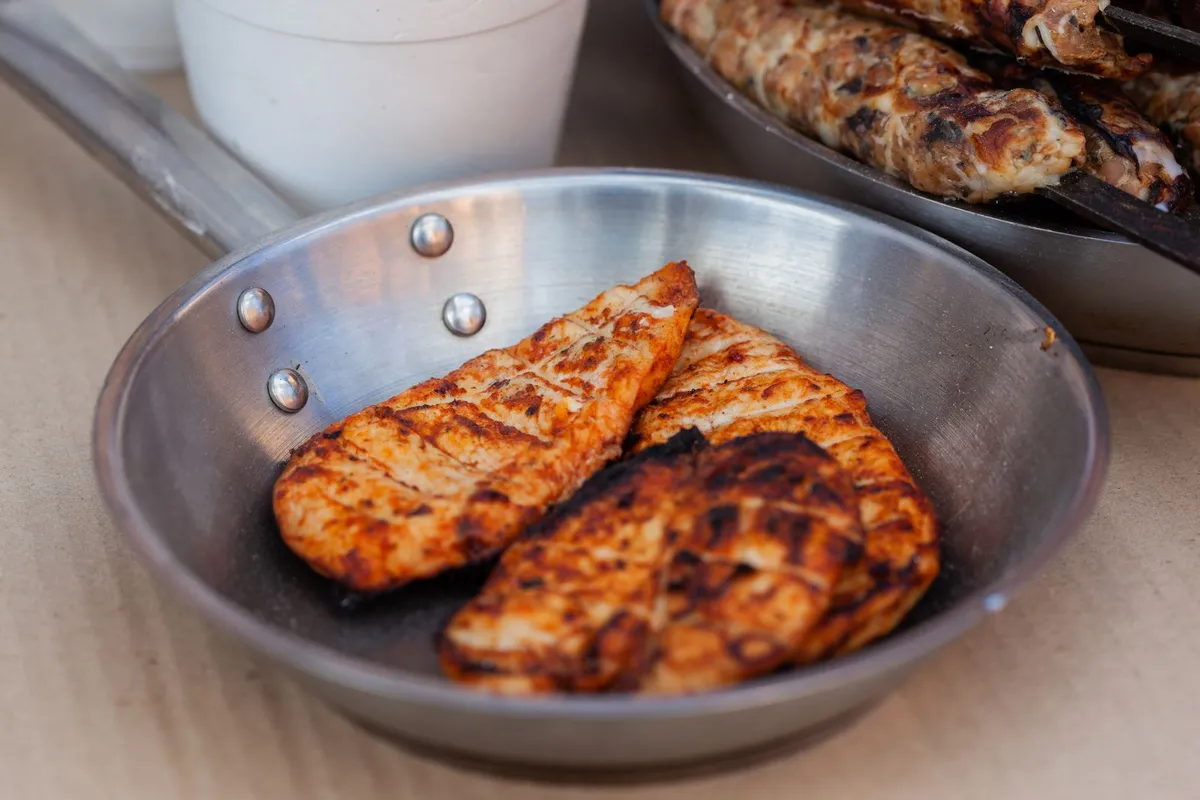
- Chicken breast, ~31 g per 165 kcal. The default for a reason.
- Fat-free Greek yogurt, ~10 g per 60 kcal, and it works at breakfast, snack and dessert.
- Cottage cheese, ~11 g per 80-100 kcal. The 1970s were right about this one.
- Lean turkey mince, ~27 g per ~150 kcal; makes chili, bolognese, burgers.
Honorable mentions
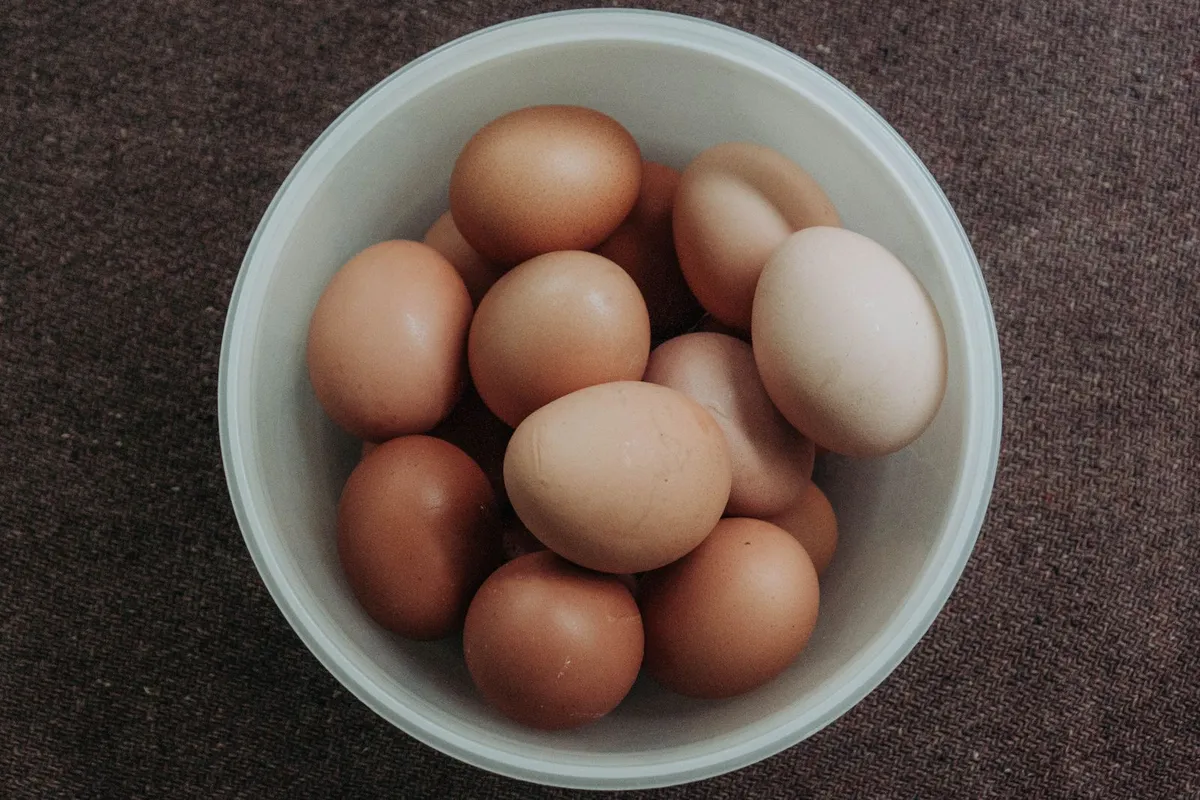
- Whole eggs, 6 g per 70 kcal; less protein-dense but nothing beats them for satiety-per-effort (full egg numbers here).
- Tofu & tempeh, ~10-19 g per 100-190 kcal, the plant-based workhorses.
- Protein powder, ~24 g per 120 kcal. Not food exactly, but it plugs the gap on rushed days.
Rule of plate: anchor every meal on one item from the elite or everyday tier, then build around it. Three anchored meals gets most people to 90-120 g before snacks even start.
The full table, protein per 100 calories
Most lists of this kind rank by protein per 100 g, which quietly rewards anything dry and dense. Seitan wins that contest and a cucumber loses it, and neither fact helps you pick dinner inside a calorie budget. Ranked per 100 kcal instead, the order changes and so does the advice. Figures below are cooked unless the row says otherwise, rounded to the nearest gram, from USDA FoodData Central.
| Food | Protein per 100 kcal | What 100 kcal looks like |
|---|---|---|
| Egg white | 21 g | About 190 g, roughly 6 whites |
| Shrimp, cooked | 24 g | About 100 g, a small bowlful |
| Cod or haddock | 22 g | About 95 g, a thick half fillet |
| Canned tuna in water | 22 g | About 86 g, most of a small tin |
| Turkey breast, skinless | 22 g | About 74 g, two thin slices |
| Pollock | 21 g | About 90 g |
| Tilapia | 20 g | About 78 g |
| Whey protein isolate | 20 g | About 25 g of powder, one scoop |
| Chicken breast, skinless | 19 g | About 61 g, half a small breast |
| Scallops | 18 g | About 90 g |
| Lean turkey mince, 93/7 | 18 g | About 67 g |
| Pork tenderloin | 18 g | About 70 g |
| Fat free Greek yogurt | 17 g | About 170 g, one small pot |
| Cottage cheese, 1 per cent | 17 g | About 139 g, a generous scoop |
| Lean beef mince, 93/7 | 14 g | About 55 g |
| Tofu, firm | 12 g | About 69 g |
| Tempeh | 10 g | About 52 g |
| Skimmed milk | 10 g | About 290 ml |
| Whole egg | 9 g | About 70 g, roughly 1.4 eggs |
| Lentils, cooked | 8 g | About 86 g |
| Black beans, cooked | 7 g | About 76 g |
| Oats, cooked | 4 g | About 143 g |
| Almonds | 4 g | About 17 g, roughly 14 nuts |
| Avocado | 1 g | About 62 g, a third of one |
Read the bottom of that table as the point of it. Almonds and avocado are good food. They are not protein, and a day built on them lands at 45 g while feeling like a healthy day.
The practical line sits at about 10 g of protein per 100 kcal. Above it, a food pays its way in a deficit. Below it, the food is doing some other job, fibre or fat or simply being pleasant, and the protein has to come from somewhere else on the plate.
What 20 g of protein costs you in calories
Turning the same table around answers the way people actually ask it, which is a fixed protein target rather than a fixed calorie budget. To reach 20 g of protein:
- Shrimp, cod, tuna or turkey breast: roughly 85 to 95 kcal
- Chicken breast: about 107 kcal
- Greek yogurt or cottage cheese: about 115 to 120 kcal
- Lean beef mince: about 140 kcal
- Tofu: about 170 kcal
- Lentils: about 250 kcal
- Almonds: about 500 kcal
The gap between the top of that list and the bottom is the whole argument. Same 20 g, and a five hundred calorie spread in what it costs you.
The cheapest protein per calorie
Protein density and price do not move together, which is why the leanest list is rarely the list people can actually shop. Ranked by what a gram of protein costs at a mainstream supermarket, the order roughly runs: dried lentils and beans, eggs, canned tuna, milk, chicken thigh, cottage cheese, chicken breast, Greek yogurt, then whey powder, with fresh white fish and shrimp at the expensive end.
Put the two rankings side by side and the honest picks are the ones that score well on both. Canned tuna, eggs, cottage cheese and skimmed milk sit in the top half of the protein-per-calorie table and the cheap half of the price table. That intersection is where most people's week actually gets built, not the shrimp.
One caveat on prices. These orderings move with country, season and shop, and this post is not going to pretend to a figure per gram it did not check in your currency. Treat it as the shape, then check two items against your own receipt.
High protein and low fat, which is a different question
Plenty of people asking this want low fat rather than low calorie, and the two lists overlap without matching. Fat carries 9 kcal per gram against protein's 4, so cutting fat is one lever on calories, but a food can be low fat and still calorie dense if it is mostly starch or sugar.
If fat is the axis you care about, the top of the list is egg white, white fish, shrimp, turkey breast, chicken breast, fat free Greek yogurt and non fat cottage cheese, all under about 3 g of fat per 100 kcal. Salmon and whole eggs drop down this list and stay high on the previous one, which is the right outcome: they are excellent food carrying fat you may well want. Running the opposite approach, high fat and low carb, the keto calculator sets a protein target against fat and carb grams instead of calories alone.
Foods that are high in protein and high in fibre at once
Protein and fibre are the two things that buy fullness, and only a short list of foods carries both. Lentils, black beans, chickpeas, edamame, green peas and tempeh all pair roughly 7 to 11 g of protein per 100 kcal with real fibre. They lose the protein-per-calorie contest outright and win the fullness-per-calorie one, which is why a plate of chicken and lentils outperforms a plate of chicken alone at the same calories.
The practical version is not either or. Anchor on an item from the top of the table, then put a fibre carrier beside it.
High protein snacks under 200 calories
Snacking is where most protein targets quietly fail, because the default snack shelf is fat and starch. Options that clear 15 g of protein for under 200 kcal:
- A 170 g pot of fat free Greek yogurt, about 100 kcal and 17 g
- A small tin of tuna, about 100 kcal and 22 g
- 150 g of cottage cheese with pepper, about 108 kcal and 18 g
- Three boiled eggs, about 215 kcal and 19 g, or two eggs plus two whites for about 180 kcal and 19 g
- A scoop of whey in water, about 120 kcal and 24 g
- 80 g of turkey slices, about 110 kcal and 24 g
- 100 g of edamame in the pod, about 120 kcal and 11 g, with fibre attached
Two of those a day is 35 g of protein that most people currently spend on biscuits at the same calories. That single swap closes the gap for a lot of readers without touching their meals at all.
Is there such a thing as a zero calorie protein?
No, and the question deserves a straight answer rather than a list that dodges it. Protein carries 4 kcal per gram by definition, so a food with meaningful protein has calories by arithmetic. The closest things to the idea are foods where the protein arrives with almost nothing else: egg white at about 52 kcal per 100 g and shirataki noodles at close to zero, the second of which has close to zero protein too.
What people usually mean by the question is a food they do not have to think about, and the honest answer there is egg white, white fish and plain nonfat dairy. They are not free. They are simply cheap enough that a normal portion rounds to nothing against a daily budget.
Volume, which is the thing the table cannot show
Protein per calorie and fullness per calorie are related and not identical. A scoop of whey is 24 g for 120 kcal and gone in twenty seconds. A 300 g plate of cod, broccoli and potatoes is more protein, more calories and a meal you actually notice eating. Asking for high protein low volume foods and asking for filling low calorie foods pull in opposite directions and both are reasonable.
If you struggle to eat enough, favour the dense end: powder, tuna, turkey slices. If you struggle with hunger, favour the bulky end: white fish with vegetables, cottage cheese with a large salad, soup built on lentils. Same table, opposite ends of it, depending on which problem you have.
Plant based, where the list gets harder and not impossible
Every food above about 15 g of protein per 100 kcal on the table is an animal product or an isolate, and pretending otherwise would be a disservice. The plant leaders are seitan at roughly 20 g per 100 kcal, soy protein isolate, then tofu at 12, tempeh and edamame at about 10, and lentils and beans at 7 to 8.
A plant based day hitting 120 g of protein is therefore a day with more total food in it, which for many people is an advantage rather than a cost. The arithmetic that changes is not whether it is possible but how much of the calorie budget the protein takes: roughly 1,200 to 1,500 kcal against 700 to 900 for an animal based day at the same protein.
What this looks like on a real day
Greek yogurt with berries at breakfast (20 g), a chicken salad at lunch (35 g), cottage cheese as the 4pm snack (14 g), salmon and rice for dinner (38 g), that's 107 g of protein for roughly 1,400 kcal, leaving room in most budgets for the bread, the fruit and the biscuit that keep life livable. Compare that with a pastry-toast-pasta day: same calories, maybe 45 g protein, and hungry by 9pm.
Tracking it without weighing chicken forever
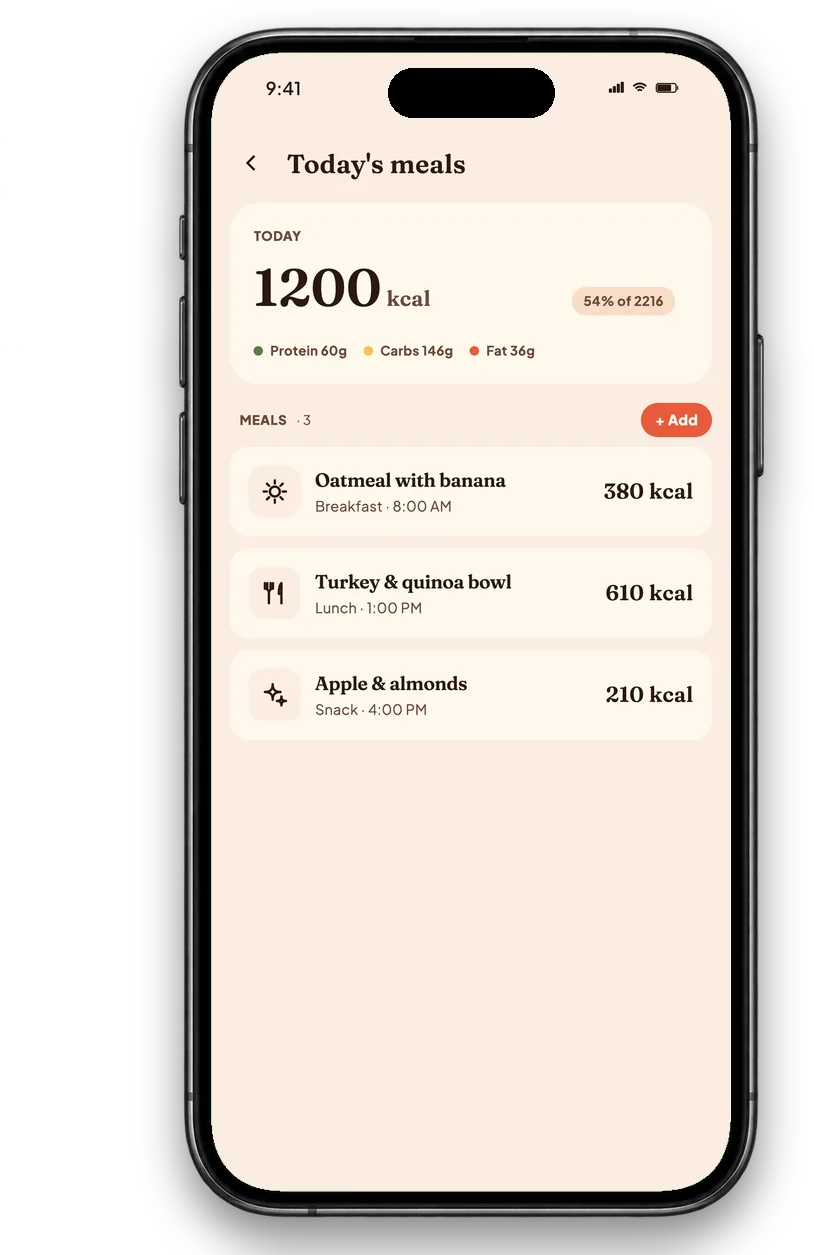
The old way was a food scale and a database. The current way is a photo: Calfit's AI scanner reads the plate, estimates the protein along with calories, and fills your macro rings as you go. When the protein ring is behind at 5pm, dinner picks itself, and if you ask Pip's coach "what should I eat?", it already knows you're 40 g short.
How this post was checked, and what it does not show
Two things are worth stating plainly, because this site is run by the people who make the app being recommended.
A photo estimate is less accurate than a kitchen scale, and that is not close. Calfit's scanner reads a plate and returns an estimate with a confidence figure attached, which is useful precisely because it is honest about being an estimate. If you are cutting for a stage or a weight class, weigh the chicken. If you are trying to average out over a month and would otherwise log nothing at all, the photo wins on the only metric that matters there, which is whether you keep doing it.
The numbers in the tables above are published reference values, not measurements this app produced. They come from USDA FoodData Central, verified against it on 2026-09-22, and the sources are listed at the end. Where a post on this site shows a Calfit scan, that scan is real and dated. This one does not carry one yet.
Sources
- FoodData Central, US Department of Agriculture, 2019
- Diet induced thermogenesis, Nutrition and Metabolism, 2004
- The role of protein in weight loss and maintenance, American Journal of Clinical Nutrition, 2015
- International Society of Sports Nutrition position stand: protein and exercise, Journal of the International Society of Sports Nutrition, 2017
- Food energy: methods of analysis and conversion factors, Food and Agriculture Organization, 2003
How this was made
Written by Abdullah Javaid, founder of Calfit, drafted with AI assistance and edited by hand. Food figures are cooked weights from USDA FoodData Central, verified on 2026-09-22 and rounded to the nearest gram, and protein per 100 kcal is the grams of protein divided by the calories, multiplied by 100. The screens are captures from the current Calfit app.