What walking actually burns (real numbers)
A rough, honest rule: walking burns about 0.5-0.7 kcal per kilogram of body weight per kilometre. For an 80 kg person that's ~45-55 kcal per km, or:
- 5,000 steps (~3.8 km) ≈ 170-210 kcal
- 8,000 steps (~6.1 km) ≈ 270-340 kcal
- 10,000 steps (~7.6 km) ≈ 340-420 kcal
Is 350 kcal a lot? It's a daily croissant, erased. Over a month it's roughly 1.2-1.5 kg of fat's worth of energy, from something that requires no gym bag and doubles as podcast time.
Why walking beats "better" exercise
Spin classes burn more per minute. They also get skipped. Walking's superpowers are the boring ones: zero recovery cost (you can do it every single day), zero appetite spike (hard cardio famously makes people eat the workout back; walking mostly doesn't), and zero dread. Consistency beats intensity for fat loss the same way it beats it in food logging, the tool you use daily outperforms the tool you admire from the sofa.
The 10,000-step myth, handled
10,000 wasn't handed down by science, it came from a 1960s Japanese pedometer's marketing. Research since shows benefits climbing steeply up to ~7,500-8,500 steps and flattening after. So: 8,000 is a great target, and "more than last month" is an even better one. If you're at 3,000 today, a 5,000-step month is a triumph; don't let a myth-number make real progress feel like failure.
Fitting the steps into a real life
- Anchor to existing habits: a 10-minute loop after each meal is ~3,000 steps hiding in plain sight, and post-meal walks blunt blood-sugar spikes as a bonus.
- Make calls walking calls. A 25-minute catch-up with your mum is 2,500 free steps.
- Park badly, exit early, take stairs. Individually silly, collectively 1,500+ steps.
- The rainy-day fallback: pacing indoors counts. The step counter doesn't judge.
Don't eat the walk back: the classic trap is "I walked 8,000 steps, I've earned a muffin", a 420-kcal muffin against a 300-kcal walk. Let walking deepen the deficit, not fund dessert.
Walking + tracking = the compound play
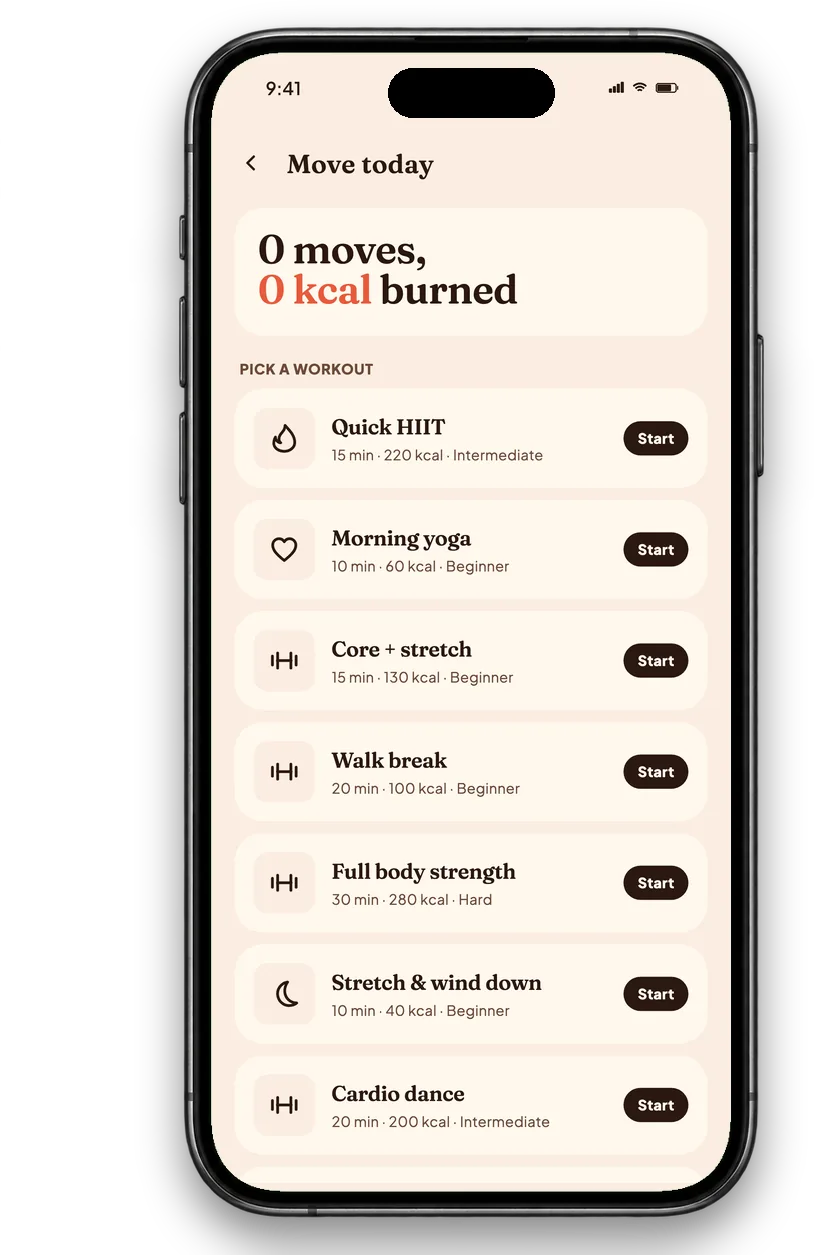
Walking alone loses weight slowly. Food tracking alone works but leaves easy calories on the table. Together they compound: the walk adds 300 kcal of room, the honest food log holds the line, and the combination hits 0.5+ kg a week without either side feeling extreme. Calfit shows both halves in one place, steps pulled from your phone's health data, meals logged by photo, and the day's balance sitting on the home screen next to Pip. The hedgehog is, frankly, very smug about post-dinner walks. Curious what a specific walk is worth on its own, without the food side attached? The steps to calories calculator converts a step count straight to calories.
Sources
- Compendium of Physical Activities, Journal of Sport and Health Science, 2024
- Association of step volume and intensity with all cause mortality in older women, JAMA Internal Medicine, 2019
- Daily steps and all cause mortality: a meta analysis of 15 international cohorts, The Lancet Public Health, 2022
- The acute effects of interrupting prolonged sitting time with standing and light intensity walking on biomarkers of cardiometabolic health, Sports Medicine, 2022
- Walking for health, NHS, 2022
How this was made
Written by Abdullah Javaid, founder of Calfit, drafted with AI assistance and edited by hand. Walking burn uses a rough rule of 0.5 to 0.7 kcal per kilogram of body weight per kilometre, with about 0.76 m per step, and the step count findings come from the cohort studies listed above. The screens are captures from the current Calfit app.